


Good Whisky Starts in a Field
On 1 October 2026, English Whisky officially received protected Geographical Indication (GI) status, which I think is a wonderful milestone for everyone involved in the industry. There are now more than 70 distilleries producing whisky in England, compared with just 46 in 2023, and English whisky is being exported to more than 30 countries around the world. It's remarkable how quickly the category has developed, and we're delighted to have recently joined the English Whisky Guild, which has worked incredibly hard to bring this recognition about.
There's been quite a bit of discussion recently about how English whisky compares with Scotch and whether the two industries are somehow in competition. Personally, I don't see it that way at all ( well, maybe a little ). Scotland has spent generations building one of the most successful spirits industries in the world, and there's a huge amount we can learn from that. English whisky has its own opportunity to develop, with different producers, styles and approaches, and I think we should be encouraging one another rather than looking for differences. Every new distillery, award, export market or person discovering English whisky for the first time is good news for the whole industry. A rising tide lifts all boats, and there's plenty of room for us all to succeed.

For our family, whisky has always been closely connected to farming. My father started Chase Distillery back in 2008 on our family farm in Herefordshire, with a simple ambition to make great spirits from the produce we grew ourselves. We started with potatoes for our vodka, and over the years built a business around British agriculture and the idea that the quality of what goes into a bottle should matter just as much as what comes out. We began laying down whisky in 2012, and following the sale of Chase Distillery to Diageo in 2021, those casks continued to mature here in Herefordshire. Having since brought the distillery back into family hands, we've been able to build Rosemaund Farm around that original whisky, with our first three releases all ten-year-old English single malts and further stocks dating back to 2012.
What particularly excites me about the English Whisky GI is the recognition it gives to British grain and the people who grow it. Under the new specification, unlike Scottish single malt, English single malt whisky must be made using UK-grown cereals, with production and maturation taking place in England. It's an important commitment to British agriculture at a time when farmers need every opportunity to add value to what they produce. Our mature whisky was made using English-grown Maris Otter barley, a wonderful traditional variety that has been grown in this country for decades. We're now growing Maris Otter on our own farm for future production, with the ambition of bringing even more of the process back to our fields. Of course, whisky takes time, so the barley we're growing today is part of a story that won't be told in the bottle for many years to come.
There is also a much wider network of British businesses involved in making our whisky, which I think is sometimes overlooked. We work with Thomas Fawcett & Sons, traditional family maltsters in Castleford, Yorkshire, whose history stretches back to 1809. Hobsons Brewery in Shropshire brings its brewing expertise to producing our wash, which we then distil here at Rosemaund in our copper pot still, affectionately known as Fat Betty. The spirit is then filled into oak casks and left to mature in our old farm warehouses, surrounded by the apple orchards of Herefordshire. Each stage involves skilled people, specialist equipment, investment and businesses employing people in their local communities.
Having spent much of my working life in farming and distilling, I've seen how much activity a successful spirits business can generate beyond its own gates. Whether it's the farmer growing barley, the maltster preparing it, the brewery producing the wash, the cooper supplying casks or the people involved in packaging, transport and hospitality, there are an awful lot of livelihoods connected to what eventually becomes a bottle of whisky. That's why I'd love to see English whisky continue to grow, not simply because it creates an opportunity for distilleries like ours, but because of the wider benefits it can bring to British manufacturing and rural communities.
I also hope the GI gives English distillers the confidence to develop their own identities. We should absolutely have clear standards and protect the provenance of what we're making, but there's room for creativity too. One of the things I find most exciting about English whisky is the variety of producers coming through, all with their own ideas about grains, fermentation, distillation and maturation. We don't all need to make whisky in the same way, and I think that diversity will become one of the category's greatest strengths. Being part of the English Whisky Guild gives us the opportunity to share knowledge, learn from one another and work towards building an industry that consumers around the world recognise and trust.
Back at Rosemaund, we're now distilling again and laying down new casks for the years ahead, while continuing to share the ten-year-old whisky that has been maturing here since the earliest days of our distillery. We're fortunate to have started with some wonderfully mature stocks, but the long-term ambition is to build something that will still be here for generations. I love the idea that the barley growing in our fields today could one day become a whisky enjoyed by someone sitting around a table with family and friends ten or fifteen years from now.
For me, that's what makes this industry so special. It requires patience, investment and a belief in what you're making, often long before you know what the finished result will be. The recognition of English Whisky is a great achievement, and I hope it encourages more people to discover what's being produced across the country, meet the people behind it and support the businesses that make it possible.
It's a very exciting time for English whisky, and I'm incredibly proud that our family and Rosemaund Farm can be part of it.
James Dashwood Chase
Founder, Rosemaund Farm Distillery
ps our caps our now live, shop now
Read more
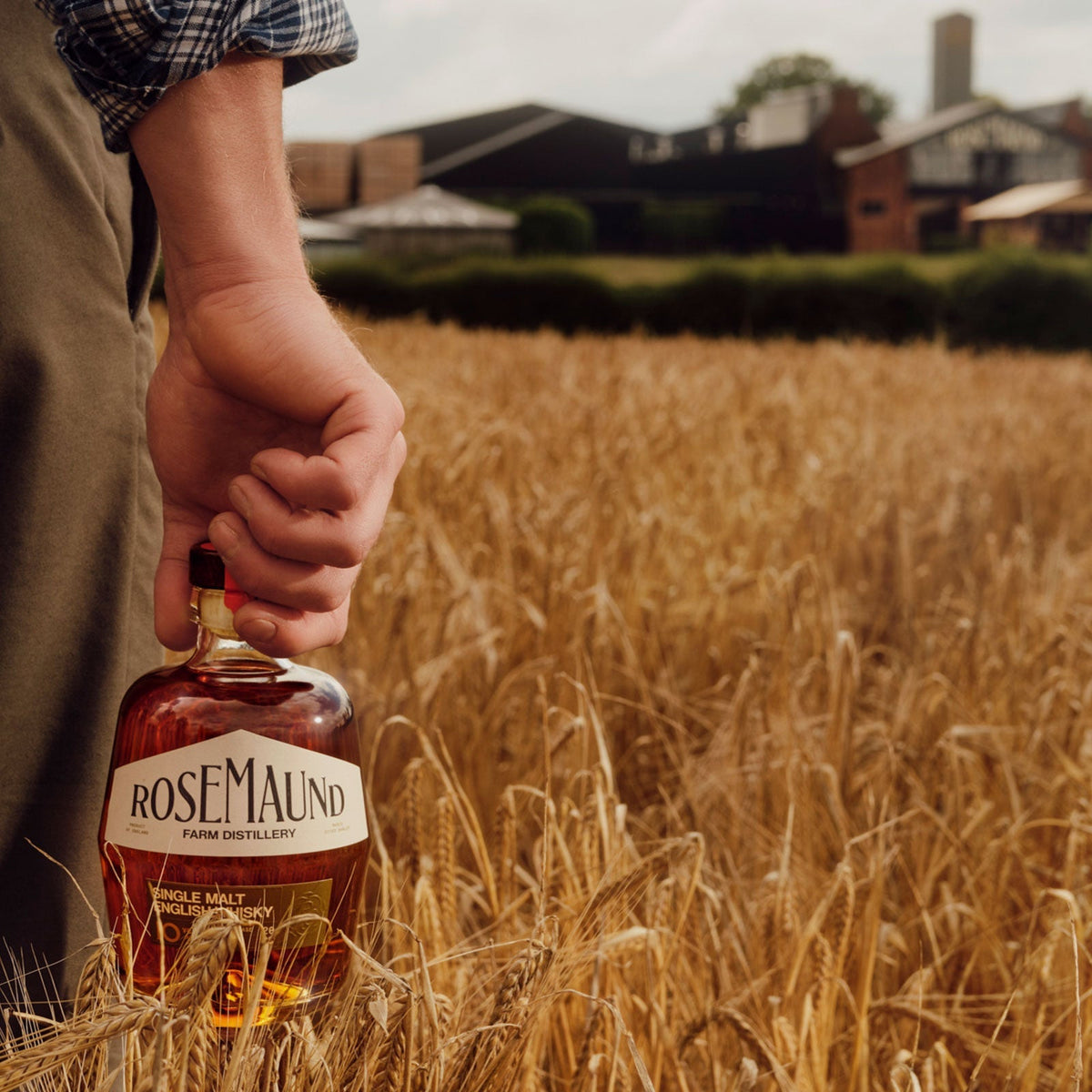
What Is Maris Otter Barley and Why Does It Matter in Whisky? Maris Otter is a traditional British two-row winter barley variety, first bred in the mid-1960s and prized for the flavour and character...
Looking for a Christmas gift for a whisky lover? From our 10-year-old English single malt to tasting glasses and distillery experiences, discover thoughtful gifts from our family distillery in Here...
