What Is Maris Otter Barley and Why Does It Matter in Whisky?
What Is Maris Otter Barley and Why Does It Matter in Whisky?
Maris Otter is a traditional British two-row winter barley variety, first bred in the mid-1960s and prized for the flavour and character it can bring when malted.
It is best known in brewing, particularly in traditional British ales, but it also has a compelling role to play in whisky.
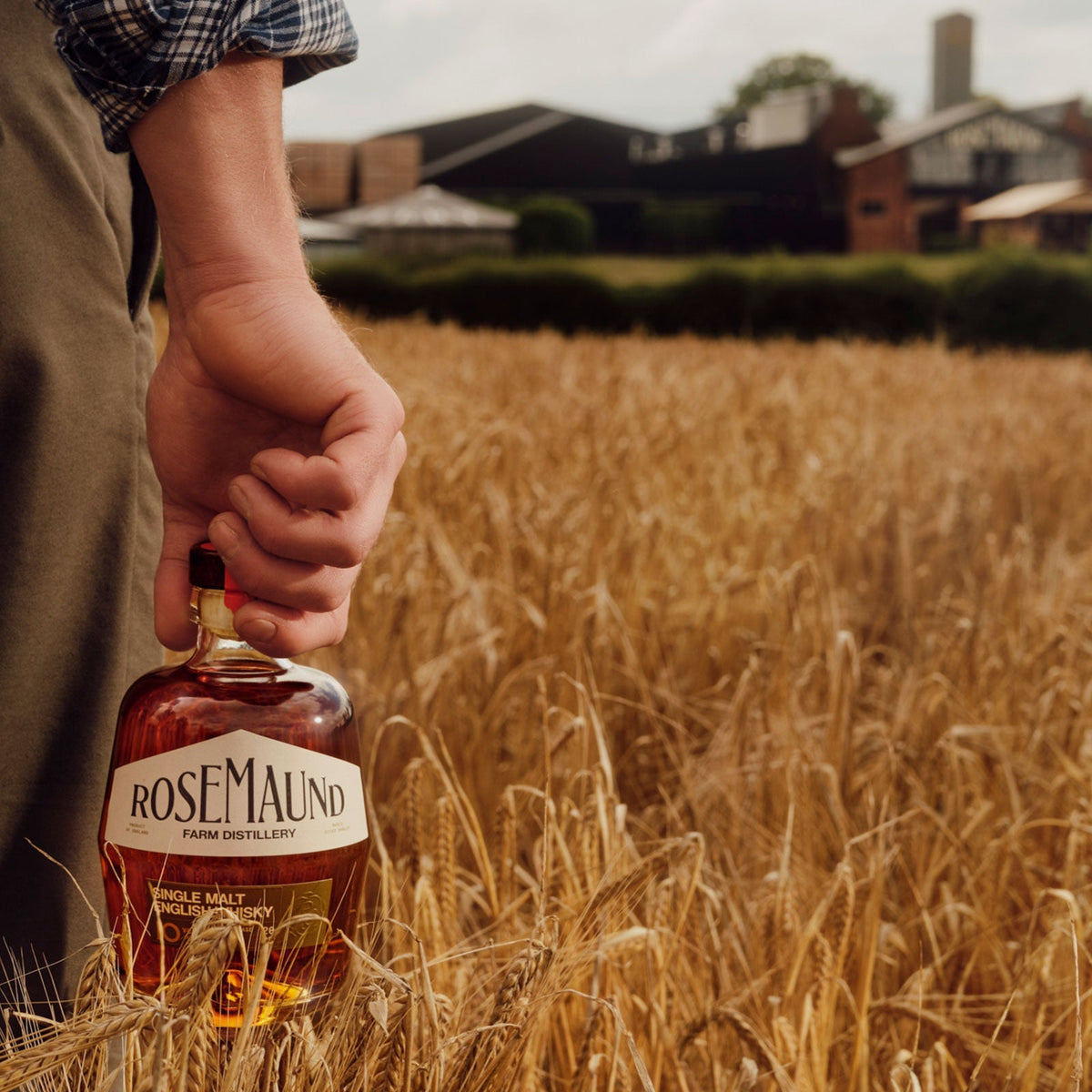
Rosemaund’s mature stocks were distilled from English-grown Maris Otter barley. We chose it for a straightforward reason: flavour mattered more to us than chasing the highest possible yield.
A barley with character
Modern agricultural varieties are often selected for efficiency, resilience and output. Those qualities matter, but they are not the whole story when the eventual product is intended to be tasted slowly.
Maris Otter has remained valued by maltsters and brewers for its malting performance and its full cereal character. Malt producers commonly associate it with biscuit, nut and rich cereal notes.
That does not mean every whisky made with Maris Otter tastes the same.
Barley is the beginning, not the finished flavour.
Fermentation, still shape, distillation cuts, cask type, warehouse conditions, time and blending all influence what reaches the bottle. But the grain establishes the raw material from which everything else develops.
Why use Maris Otter for whisky?
For Rosemaund, Maris Otter offers three things.
First, it gives the new make spirit a proper malty core. Even after ten years in oak, we want the grain to remain present rather than disappear beneath the cask.
Second, it connects the whisky to England’s farming and brewing culture. Maris Otter is not an imported piece of whisky mythology. It belongs to the landscape and agricultural history from which Rosemaund has grown.
Third, it represents a choice.
A distillery can choose ingredients primarily for efficiency, or it can ask what each ingredient contributes to the eventual glass. At Rosemaund, we believe the answer should begin with flavour.
Does Rosemaund grow its own Maris Otter?
Our currently mature releases were made from English-grown Maris Otter barley. We should be clear that this does not mean all the barley in today’s bottles was grown in Rosemaund’s own fields.
We have now begun growing barley at Rosemaund Farm as we explore how more of our future whisky can originate here.
That work will take time. Whisky does not reward hurried claims.
The barley must be grown, harvested, malted, brewed, distilled and then matured for years before the results can be assessed properly. The first crop is therefore not a marketing conclusion. It is the beginning of a long experiment.
Can you taste Maris Otter in Rosemaund whisky?
You cannot isolate a barley variety in a mature whisky as neatly as identifying a single added flavour.
What you can find in Rosemaund is a persistent cereal character: malted biscuit, soft bread, toasted grain and an oily mid-palate that holds its own beside fruit, oak and spice.
In our first release, that malt sat beneath baked apple, meadowsweet and dried fruit.
The Orchard Cut brought a brighter expression, with green apple, citrus oils, herbs and a creamy texture.
In The Director’s Cut, the cereal core supports richer notes of baked red apple, toasted oak, wild berries and baking spice.
Different casks. Different seasons. The same grain-led foundation.
From English field to English whisky
Scotland has shown how powerfully a whisky industry can support and communicate its relationship with land, grain and place.
England now has an opportunity to build its own whisky culture from the farm upwards.
For Rosemaund, that means keeping barley visible in the story. Not as rustic decoration, but as the raw material upon which the entire whisky depends.
Maris Otter may not be the easiest route to maximum output.
That is rather the point.
Maris Otter questions
- Is Maris Otter a heritage barley? — It is widely described as a heritage British malting barley and has been grown since the 1960s.
- Is Maris Otter used only for beer? — No. Although especially well known among brewers, it can also be mashed, fermented and distilled to produce malt whisky.
- Does Maris Otter make whisky taste like biscuits? — It can contribute rich cereal and biscuity characteristics, but fermentation, distillation and maturation have an equally important effect on the finished whisky.
- Is all Rosemaund whisky made from barley grown on Rosemaund Farm? — No. Our mature whisky was made with English-grown Maris Otter. We have begun growing barley at Rosemaund as part of our longer-term ambition for future production.